
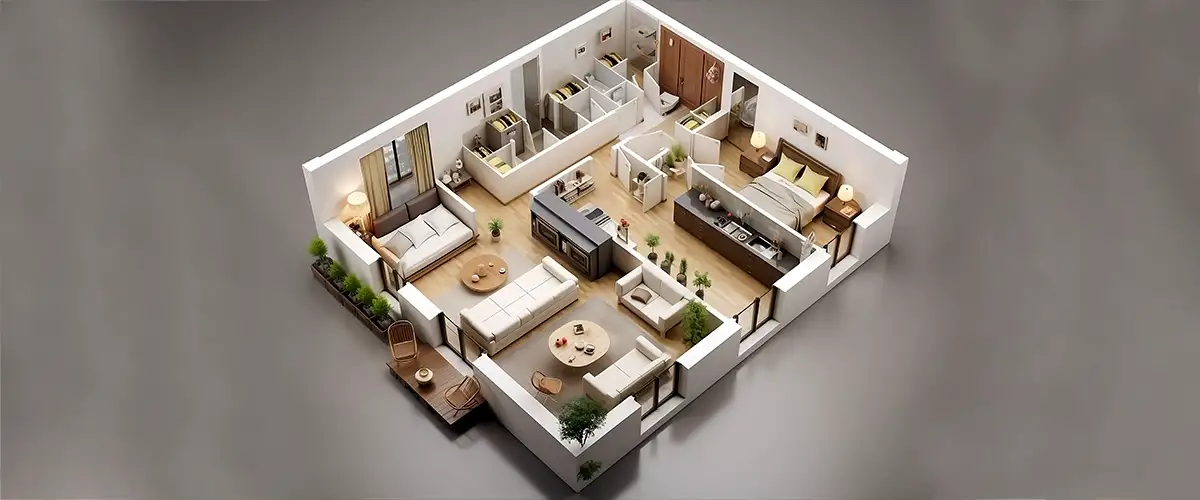
In the fast-paced architectural landscape of the Mumbai Metropolitan Region (MMR), the demand for Optimized Urban Floor Plans has made the internal geometry of a home more critical than its square footage. Gone are the days when a residence was merely a collection of rooms; today, it is a high-functioning ecosystem designed to support wellness, productivity, and social connection.
For the modern urbanite, the architectural layout of a dwelling dictates the rhythm of their day. Whether you are a remote professional needing a quiet corner or a growing family requiring shared recreational zones, the efficiency of your living space determines your mental clarity and physical comfort.
Spatial Efficiency & Modern Floor Plans
Traditional housing often suffered from “dead zones”—corridors and awkward corners that added to the cost but offered zero utility. Contemporary residential design focuses on eliminating these inefficiencies. By prioritizing carpet area optimization, developers are now creating homes that feel significantly larger than their technical measurements suggest.
- Zero-Waste Passage Design: Modern blueprints favor “foyer-less” entries or integrated hallways that double as gallery spaces or storage units.
- Multipurpose Zones: A dining area that transitions into a workstation or a balcony that serves as a private yoga studio ensures every square inch works for you.
Better Ventilation: The Impact of Smart Home Layouts
In a humid climate like ours, cross-ventilation isn’t just a luxury; it’s a health necessity. Smartly engineered homes utilize strategic window placements to harness the Venturi effect, ensuring a constant flow of fresh air.
This focus on biophilic design reduces reliance on artificial cooling, lowering utility bills while significantly improving the Indoor Air Quality (IAQ). When a floor plan facilitates natural light penetration, it regulates the occupants’ circadian rhythms, leading to better sleep and heightened focus.
Why Open-Concept Layouts Redefine Family Dynamics
The shift toward open-plan living has revolutionized how families interact. By removing unnecessary partitions between the kitchen, dining, and living areas, the home becomes a “social hub.”
- Seamless Entertaining: Host guests without feeling isolated in the kitchen; the fluid transition allows for continuous engagement.
- Parental Supervision: Modern layouts allow parents to keep an eye on children in the living room while attending to household tasks.
- Visual Continuity: The lack of walls creates a sense of “infinite space,” making even a compact 1 BHK or 2 BHK feel expansive and airy.
Enhanced Privacy Through Intelligent Zoning
While open spaces are trending, modern floor plans also master the art of “Privacy Zoning.” This is achieved through a clear separation between the social zones (living/dining) and the private sanctuaries (bedrooms).
In premium gated communities, architects often employ a “split-wing” or “L-shaped” configuration. This ensures that even if you have guests in the lounge, the bedrooms remain quiet and secluded. This balance between communal vibrancy and individual solitude is the hallmark of a high-yield real estate asset.
Future-Ready Homes: Intent-Driven Features
As we look toward the 2026 housing market, certain feature-specific keywords have become non-negotiable for buyers:
- Dry Balconies: Dedicated spaces for laundry and heavy cleaning, keeping the main kitchen pristine.
- Master Suites with Walk-in Niches: Providing a sense of luxury and organized storage.
- Smart Kitchen Triangles: Optimized distance between the sink, stove, and refrigerator to minimize physical strain during meal prep.
Maximizing Investment Returns Via Smart Design
From an investment perspective, a well-thought-out floor plan is a safeguard against depreciation. Properties with functional, modern layouts command higher rental yields and faster resale turnover.
“In a competitive market like Thane or Kalher, a property with 10% less area but 20% better space utilization will always sell at a premium compared to a cluttered, larger apartment.”
When you evaluate a project, look beyond the price per square foot. Analyze the Carpet Area Ratio and the window-to-wall ratio. These technical nuances are what differentiate a standard apartment from a lifestyle-centric residence.
Sustainable Living and Energy Efficiency
Contemporary blueprints are increasingly incorporating sustainable elements that go beyond solar panels.
- Thermal Massing: Positioning rooms to minimize direct afternoon sun, keeping the interiors naturally cooler.
- Acoustic Insulation: Floor plans that use “buffer zones” (like bathrooms or closets) against common walls to reduce noise transfer between neighbors.
Experience The Future Of Urban Housing
Choosing a home is about choosing how you want to feel every morning when you wake up. A modern floor plan isn’t just about walls and doors; it’s about the flow of energy, the warmth of the sun, and the ease of movement.
If you are looking for a residence that perfectly balances innovative engineering with emotional comfort, it is time to explore the next generation of housing. Discover homes where every corner is designed with your future in mind.
Ready to Upgrade Your Daily Living?
Connect with our Experts: +91 9860949793
Explore Optimized Layouts: www.jvinfra.in/projects/riddhi-siddhi-nx